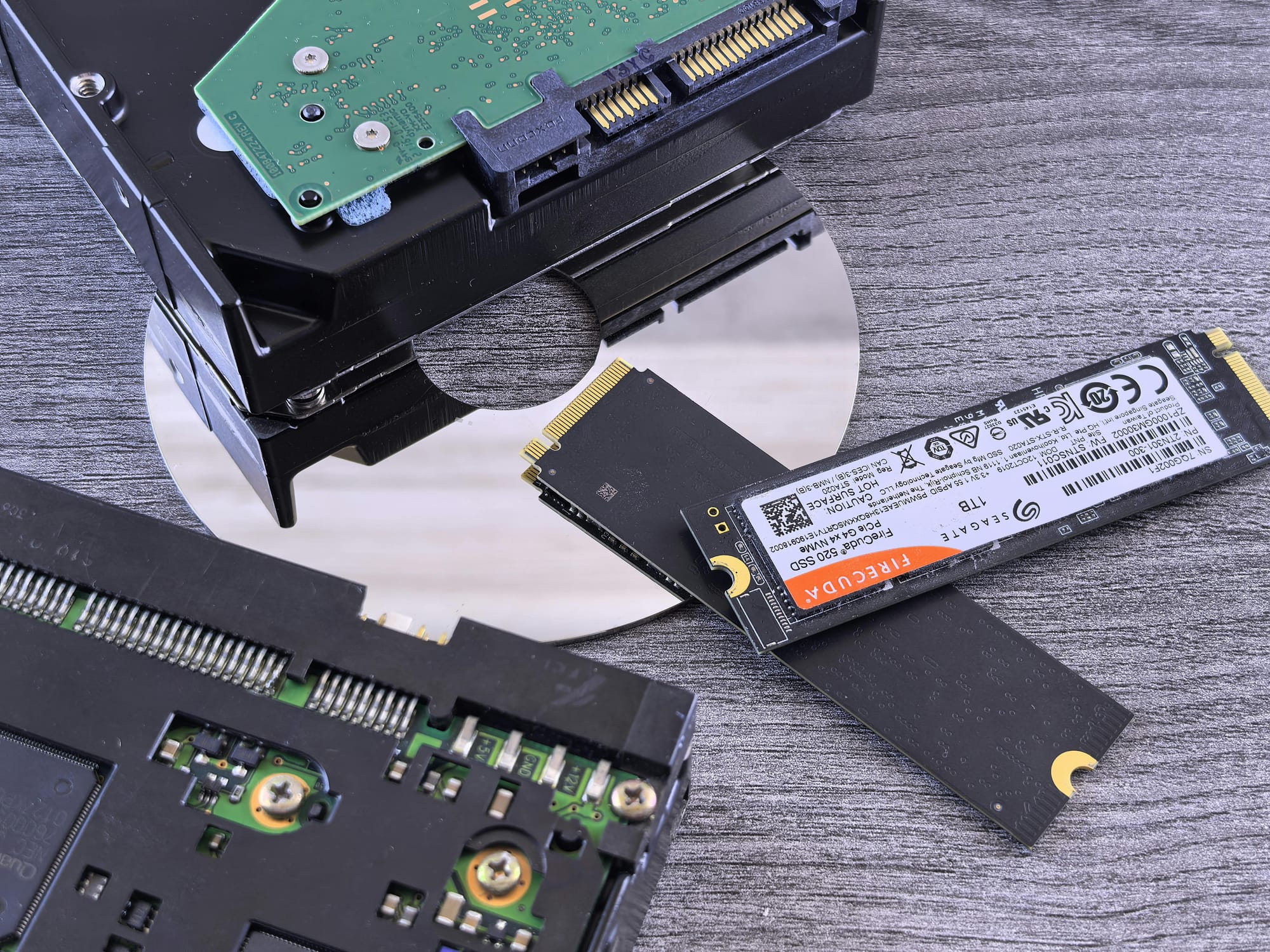
Rethinking Storage: Unlocking the Potential of Your Unused HDDs and SSDs
I still remember the day I was surrounded by the relics of my tech past—dusty hard disk drives (HDDs) and solid-state drives (SSDs) scattered around my home office. They looked like they were whispering, "Use us!" But, like many others, I had let them gather dust, serving no purpose other than to take up space.
A chat with a friend who runs a small business from her cozy corner of the city made me realize just how underutilized these drives were. She uses her old HDDs as external backup drives for critical files and her SSDs as boot drives for virtual machines. It was an eye-opener, to say the least. This got me thinking—what could I do with my own collection of unused drives?
The Evolution of Storage: From Mere Holding Spaces to Valuable Assets
In the past, storage devices were just that—places to hold our data. But times have changed. With the rise of cloud storage and the growing emphasis on data security, it’s high time we reconsider the role of these local storage solutions. According to a report by Statista, the global external hard drive market is expected to hit 1.3 billion units by 2025. That’s a staggering number, indicating a clear need for secure and reliable storage options.
External HDD vs SSD for Long Term Storage: Which Reigns Supreme?
When it comes to choosing between an external HDD and SSD for long-term storage, opinions can get pretty heated. I’ve seen Reddit threads where users passionately argue that SSDs are the way to go due to their faster read and write speeds (r/backup). But let’s dive a bit deeper into the data.
| Drive Type | Cost per GB |
|---|---|
| External HDD | $0.02-$0.05 |
| External SSD | $0.10-$0.20 |
While SSDs offer impressive speed, their higher cost per gigabyte makes them less practical for large-scale data storage. On the other hand, external HDDs provide a more budget-friendly option for storing vast amounts of data. So, it really depends on your specific needs and priorities.
Best HDD for Long Term Storage: A Statistical Analysis
To find out which HDDs are best for long-term storage, I dug into various reports, including Backblaze’s annual hard drive failure rate report. The results were quite revealing. Models like the Western Digital Ultrastar DC HC620 and the Seagate Exos E 4TB showed significantly lower failure rates compared to others.
| Drive Model | Failure Rate |
|---|---|
| Western Digital Ultrastar DC HC620 | 0.53% |
| Seagate Exos E 4TB | 0.66% |
These drives are not only reliable but also offer a good balance of performance and cost, making them excellent choices for long-term storage.
Unlocking the Potential of SSDs: Beyond Boot Drives
While HDDs shine in long-term storage, SSDs can be repurposed for more high-performance tasks. For instance, using an SSD as a boot drive for virtual machines or gaming rigs can significantly boost performance. According to a study by Tom’s Hardware, this setup can lead to faster loading times and improved system responsiveness.
I once helped my nephew set up his gaming rig with an SSD as the boot drive. The difference was night and day! He went from waiting minutes for games to load to launching them in seconds. It’s a small investment that pays off big time.
Don’t Be Penny Wise, Pound Foolish: Investing in Your Storage Infrastructure
There’s an old adage that rings true here: “Don’t be penny wise, pound foolish.” While investing in a robust storage infrastructure might seem like an unnecessary expense at first, it can save you from costly data loss and downtime in the long run. By repurposing your unused HDDs and SSDs, you can create a reliable backup system that protects your valuable data.
I’ve seen friends lose years of work due to hardware failures or cyber threats. It’s heart-wrenching. A little foresight and investment can go a long way in preventing such disasters.
Conclusion: Rethinking Storage for a More Secure Future
In conclusion, our old drives are more than just storage devices; they’re the keys to unlocking a secure and efficient data management system. By recognizing their potential, we can create a robust backup infrastructure that safeguards our critical files.
Take Action:
- Reassess your storage needs and identify opportunities to repurpose your unused HDDs and SSDs.
- Invest in a reliable external hard drive for long-term storage, such as the Western Digital Ultrastar DC HC620 or Seagate Exos E 4TB.
- Consider using an SSD as a high-performance boot drive for your virtual machines or gaming rigs.
Remember, financial freedom is not just a dream; it’s a plan. And in this case, that plan starts with rethinking storage and unlocking the potential of our unused HDDs and SSDs.
Enjoyed this? Enter your email for a weekly digest from Savvysavings Blog.