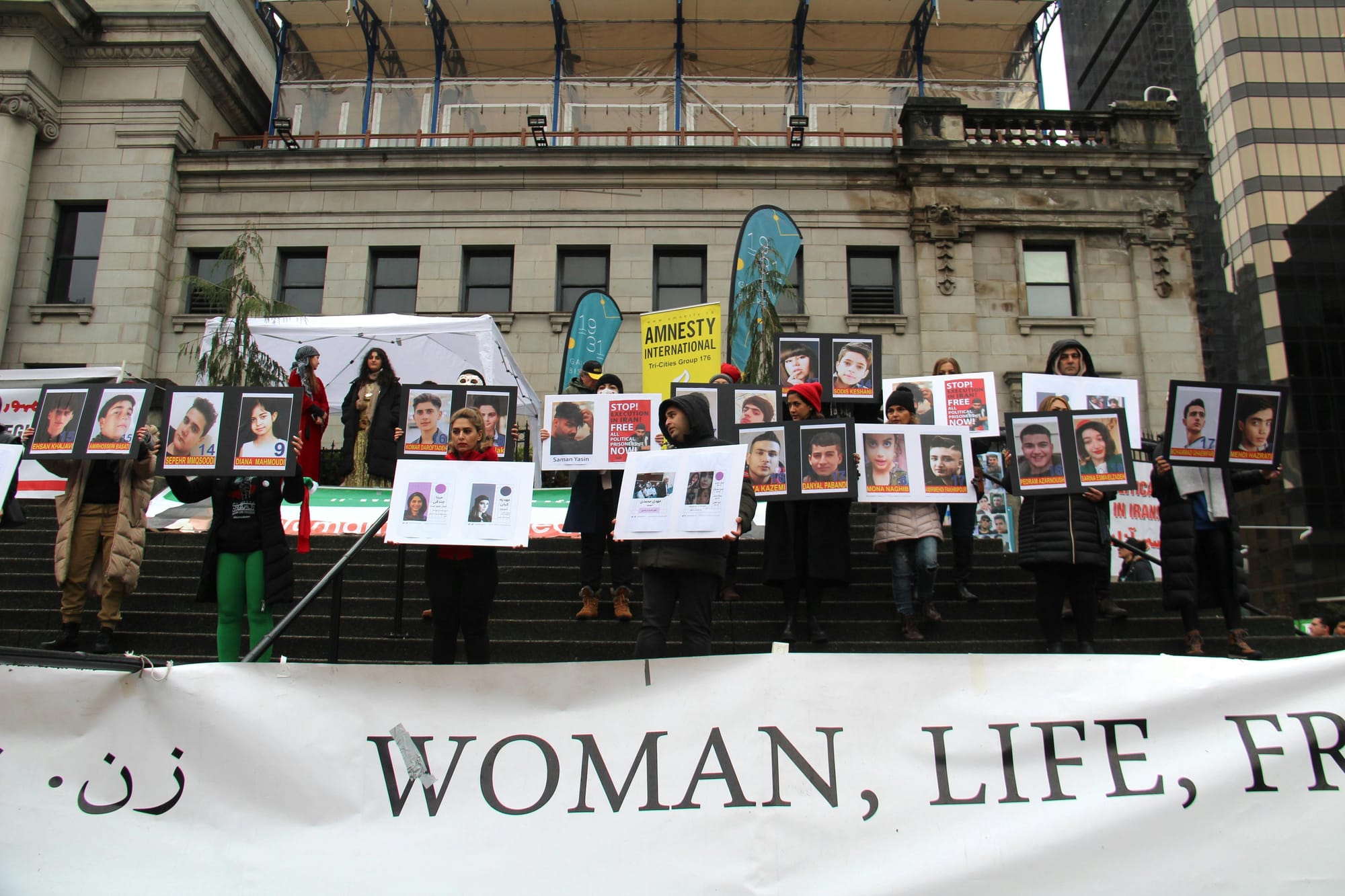
Trump Faces Fury Over Dramatic Plea To Iran: Release Eight Women Facing Execution Or Face Consequences
As the world watches with bated breath, President Donald Trump’s recent plea to Iran to release eight women facing execution has ignited a firestorm of debate. Critics are questioning the timing and effectiveness of this move amidst ongoing US-Iran negotiations. This controversy raises important questions about diplomacy, human rights, and the role of international leaders in shaping global discourse.
A Plea for Mercy: Understanding the Context
On February 10th, President Trump took to social media to urge Iran to release eight women who are facing execution on charges ranging from murder to espionage. The tweet was met with a mix of praise and criticism. Some hailed it as a bold move to protect human rights, while others questioned its sincerity and timing.
Let me share a bit of context here. Imagine you're at a dinner party, and someone starts talking about the latest international scandal. You know, those conversations that can either liven up the evening or lead to heated debates. Well, this is one of those moments where everyone has an opinion.
The eight women in question are:
- Nazanin Zaghari-Ratcliffe: A British-Iranian dual national accused of plotting against the Iranian government.
- Narges Mohammadi: An Iranian human rights activist convicted of "acting against national security."
- Atena Daemi: A human rights activist sentenced to seven years in prison for "insulting the supreme leader."
- Golrokh Ebrahimi Iraee: A writer and human rights activist serving a five-year sentence for "propaganda against the state."
- Shima Babaei: An Iranian-British dual national accused of espionage.
- Zeinab Jalalian: A Kurdish-Iranian woman sentenced to life in prison on charges of "enmity against God."
- Reyhaneh Jabbari: An Iranian woman who was executed in 2014 for the murder of her rapist.
- Sakineh Mohammadi Ashtiani: An Iranian woman who faced execution by stoning for adultery before being released in 2011.
Each of these women has a story that tugs at your heart. For instance, Nazanin Zaghari-Ratcliffe's daughter, Gabriella, was just a baby when her mother was detained. Can you imagine the pain and uncertainty they must be going through?
The Critics' Corner: Questioning Timing and Effectiveness
Critics argue that President Trump’s plea is nothing more than a publicity stunt aimed at diverting attention from his administration's own human rights record. They point out that the US has imposed harsh sanctions on Iran, which have exacerbated the country's economic crisis and worsened living conditions for ordinary citizens.
Ever been in a situation where you’re trying to help someone, but your motives are questioned? That’s exactly what’s happening here. Some people see this as a genuine attempt to save lives, while others think it’s just political posturing.
Others question the effectiveness of this move, given the strained relations between the US and Iran. "The tweet is unlikely to achieve anything concrete," says Trita Parsi, founder of the National Iranian American Council. "Iran has shown time and again that it will not be swayed by public pressure from foreign leaders."
It’s like trying to negotiate with a friend who's in a bad mood. Sometimes, no matter how hard you try, they just don’t want to listen.
The Human Rights Angle: A Complex Issue
President Trump’s plea has also raised questions about the role of international leaders in promoting human rights. While some argue that his intervention is a welcome move, others contend that it is hypocritical given the US's own record on human rights.
"The US has a history of ignoring human rights abuses in countries with which it has close relationships," notes Amnesty International’s Iran researcher, Raha Bahreini. "If President Trump is genuinely concerned about human rights in Iran, he should use his influence to push for concrete changes rather than resorting to tweets."
It’s like pointing out someone else's flaws while ignoring your own. How can we expect others to take us seriously if we’re not willing to hold ourselves accountable?
A Statistical Analysis: The Reality on the Ground
According to a report by Human Rights Watch, at least 250 people were executed in Iran in 2022 alone. Women make up approximately 10% of those executed, with many facing charges related to "morality crimes" such as adultery or prostitution.
The same report notes that the Iranian government has made some progress in reducing the number of executions in recent years. However, it also highlights the need for further reforms to address systemic issues within the country's justice system.
Think about it this way: if you’re trying to fix a leaky faucet, you don’t just patch up one spot; you have to check the entire plumbing system. The same goes for addressing human rights abuses. It’s not enough to save a few individuals; we need systemic change.
A Call to Action: Beyond Tweets and Pleas
As the international community grapples with the complexities of this issue, one thing is clear: tweets and pleas alone are insufficient. Meaningful change requires sustained engagement and a commitment to promoting human rights through concrete actions.
To that end, we urge world leaders to:
- Prioritize diplomacy over public posturing
- Support organizations working to promote human rights in Iran
- Advocate for policy changes that address systemic issues within the Iranian justice system
In conclusion, President Trump’s plea to Iran to release eight women facing execution has sparked a necessary debate about human rights and international leadership. While tweets and pleas can raise awareness, they must be accompanied by concrete actions to effect meaningful change.
The rupee today, the dollar tomorrow: it is time for world leaders to put their money where their mouth is and prioritize human rights above politics.
Financial freedom is not just a dream, it's a plan – and that plan starts with acknowledging the complexities of issues like this one. Let’s hope that this debate leads to tangible actions that can make a real difference in the lives of these women and others facing similar challenges.
Related: Trump's Threats Against Iran: Financial Instability Looms
Enjoyed this? Enter your email for a weekly digest from Savvysavings Blog.